Research Project
Soft Smart Sleeve
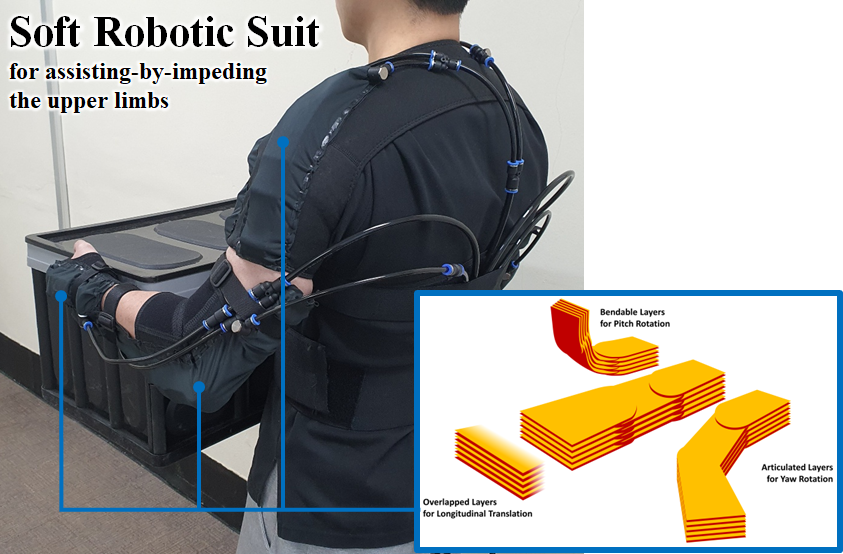
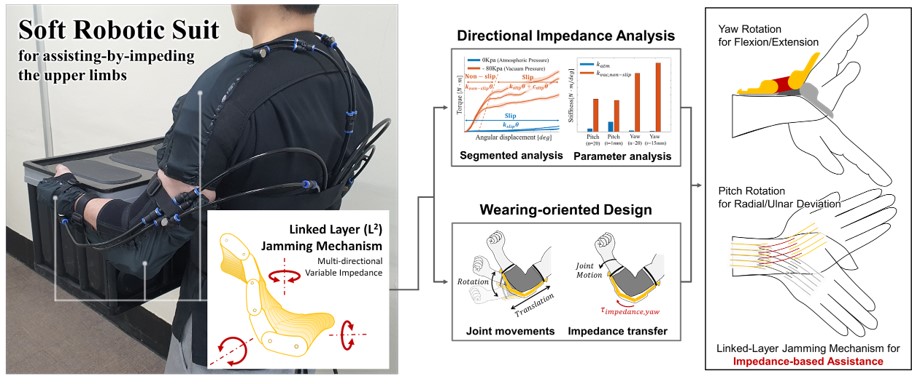
Multi-directional Variable Impedance Mechanism
Research on soft wearable robots is essential due to their flexibility, adaptability, safety, cost efficiency, and user convenience. These robots utilize soft and flexible materials to conform to various body shapes and movements, garnering interest in the robotics field due to their lightweight and safe characteristics. To create an effective wearable robot that meets these requirements, we are focusing on the following: 1) a variable impedance mechanism capable of multi-degree-of-freedom movement known as Slide-Linkage-based Layer Jamming, 2) a Linked-Layer Jamming Mechanism that is more suitable for wearable robots, and 3) a wearable robot capable of impedance-based assistance for multi-degree-of-freedom, multi-joint upper limb tasks. This research aims to enable comfortable movement for the wearer while providing effective assistance.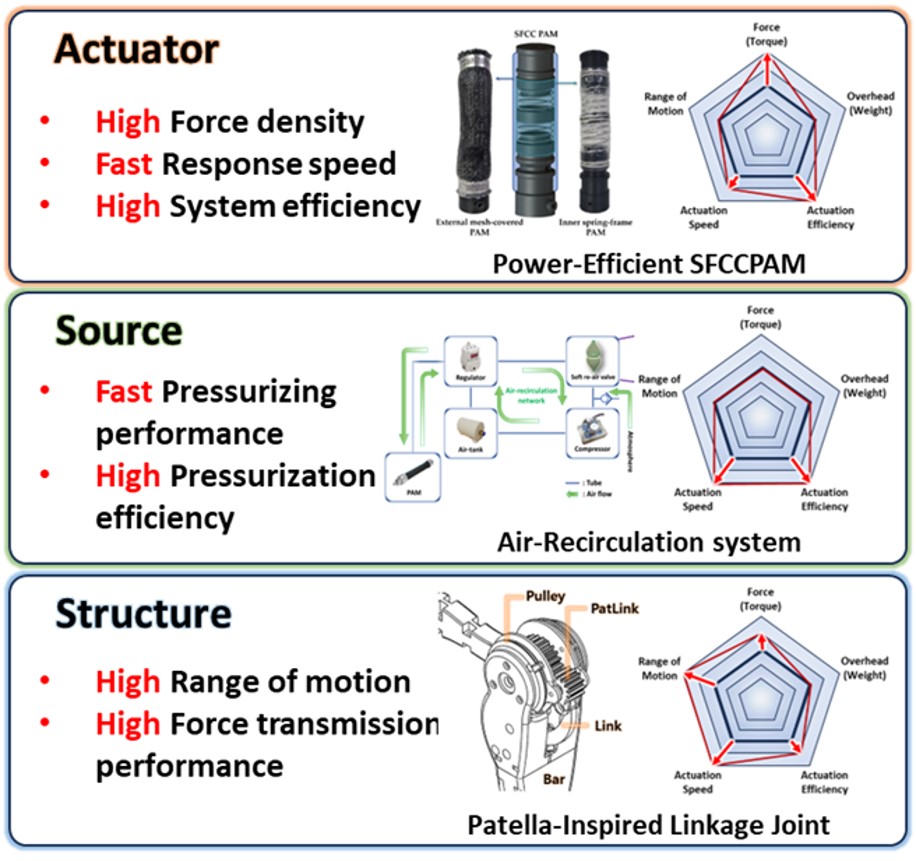
Pneumatic artificial muscles (PAMs) have shown promising potential as actuators for safe human-robot interactions due to their high force density and inherent compliance. However, drawbacks such as force reduction, relatively poor control performance, and low energy efficiency have hindered the practical application of PAMs in robotic systems. To address these issues and efficiently implement pneumatic systems, we have conducted the following research in the areas of actuators, power sources, and structures: 1) a high-efficiency actuator based on a spring frame, 2) a compressed air recirculation system for efficient pneumatic systems, and 3) a knee joint-mimicking force transmission structure based on the force characteristics analysis of pneumatic artificial muscles. These studies approach the inefficiencies of pneumatic systems, enhancing not only their efficiency but also the mechanical performance of pneumatic actuation systems.